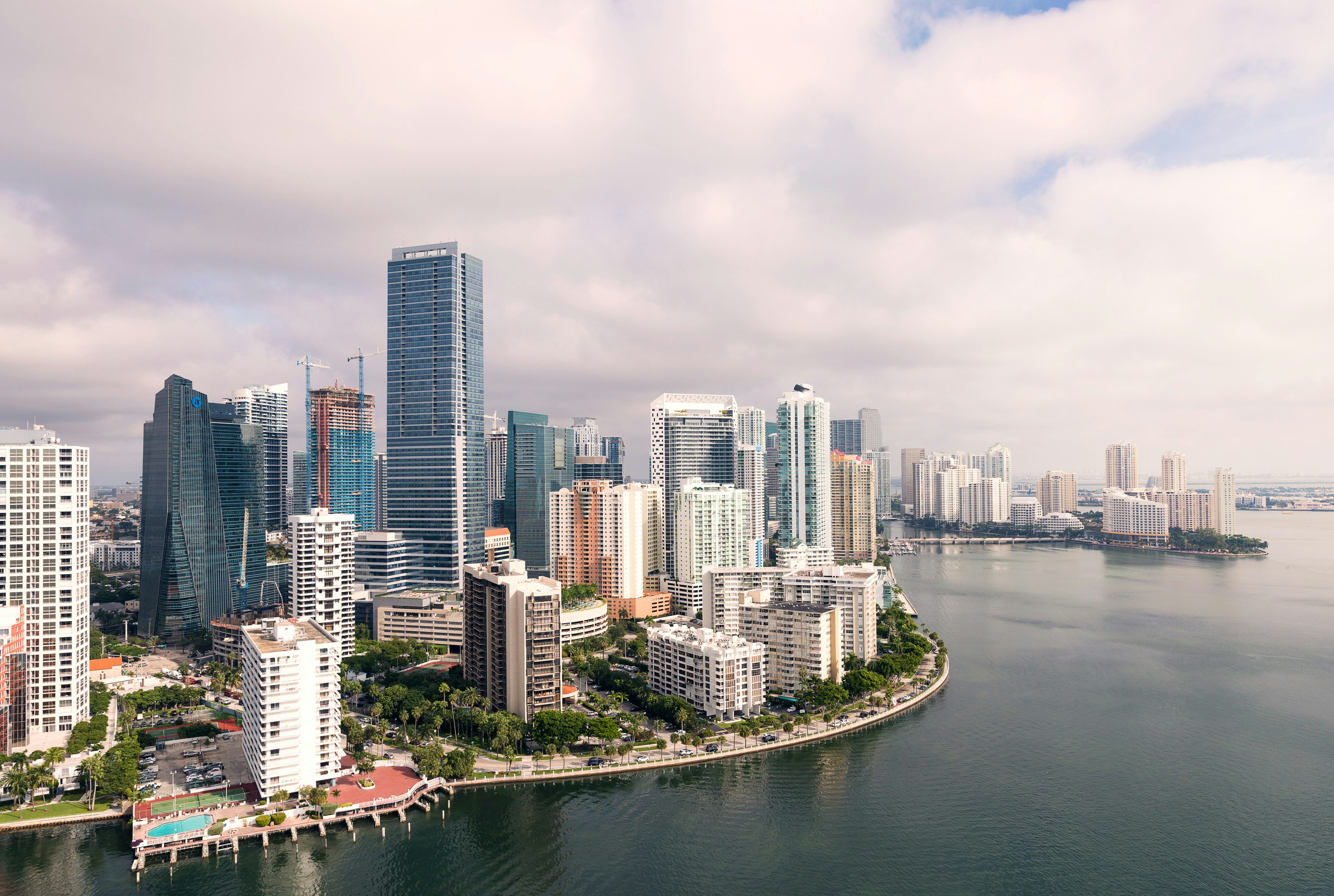
Fancy doing high-quality work all while living a stone’s throw from the beach? We certainly do! Recruiters at Lateral Link tell us more about why attorneys are sea-zing the opportunity to coast on down to Miami…
Madeleine Clarke, November 2025
When thinking about a career in law, the image that often comes to mind is life in a busy city akin to New York, coffee in hand amid the backdrop of a busy morning commute. While there certainly are perks to the big city and its hustle and bustle, high-quality work doesn’t have to mean compromising weekends at the beach, if that’s your cup of tea. Enter Miami. While the city has maintained a reputation as a lifestyle destination for quite a while, the last half decade or so has seen businesses and industries flocking to the city, shaking up the legal market in the process. We spoke with Lateral Link’s Robin Wexler, Brittany Zoll, Steven Rushing, and Evan Jowers to find out more about what Miami has to offer laterals.
Sea Change
The legal market in Miami has undergone some significant changes in recent years and it’s been a story of serious growth. The Covid-19 years saw an influx of clients to the region, bringing with them new opportunities for law firms, both ones already in Miami and national and international firms who eyed, and continue to eye, Miami as prime real estate for growth. Add to that attorneys who chose to move south during that period and you have the recipe for a dynamic time.
About four years ago, “every top firm seemed like it was going to be opening an office here!” Steven Rushing tells us. How about now? “It does seem to have settled down but there is definitely hiring going on at the new firms. There's no question about that,” says Rushing, “I'd say it’s a steady growth.”
“Clients want a Miami presence. They're here and they want their attorneys here."
What’s behind firms lining up to enter the Miami market? “Clients want a Miami presence. They're here and they want their attorneys here,” says Brittany Zoll. “They could send the work back to New York, but clients who are based in Florida today may want local counsel that they can go and meet with today face to face,” adds Robin Wexler, “clients want the personal connection. They want local lawyers.”
Florida’s laws, especially concerning tax advantages, have made it an attractive location for businesses, and where business goes, law firms follow. “Most of the firms that have recently come to Miami have done so to get involved with the growing tech and fintech industries, real estate development, and litigation,” says Evan Jowers, as the tech and real estate industries are going strong and Miami remains a key state for federal litigation, for many long-standing reasons. Particularly notable areas of litigation include commercial, bankruptcy, white-collar, securities, and international arbitration. Looking to the future, Jowers sees recent arrival firms developing full-service operations in Miami as they grow and add practice areas.
“It's crazy to see Miami now from where it was years ago,” says Wexler, “It's unbelievable! Every time I am in Miami, I'm just astounded how everything has dramatically expanded. There's so much industry, construction, real estate, all of that energy. It's just crazy.” Naturally, the population growth has contributed to the boom in real estate and construction opportunities for law firms, and the visible effect this has had on the Miami skyline, but there’s also a fair bit of work related to projects in Latin America and the Caribbean.
On that note, while Miami has traditionally been a launching pad for firms to enter Latin America, “that's now becoming a smaller part of the BigLaw practice here, but it's still a pretty decent percentage,” Jowers tells us, “It just used to be if an international firm had an office in Miami, it was probably because of their clients in South America. It's more complex than that now.” That said, Spanish language skills certainly don’t harm a lateral’s prospects, as not only do Miami-based firms deal a lot with LatAm markets, but Miami itself is a very Spanish-speaking city.
As a final note on practice areas, Wexler tells us that wealth planning is an increasingly growing area of work in Miami, thanks to the concentration of family offices, CEOs, and financial institutions in the region and greater need for estate, tax, trust and family-office advisory related work.
Miami Is Always a Good Idea
It’s all well and good for firms to expand in Miami but if the traditionally relatively small legal market doesn’t have enough attorneys to go round, what then? Well, firms will need to attract talent from out of state. Luckily for them, there’s no shortage of things Miami has to offer potential laterals.
“It's a desirable location and a hot market,” sums up Zoll. Most attorneys making the move to Miami are migrating south from New York and the wider Northeast region, Rushing tells us. “If you're coming specifically to Miami, you want a growth city in America that will have fantastic winters and no state income tax doesn’t hurt,” he says. Trading bleak January days in New York for sunny South Beach is a bit of a no brainer, if you ask us. Our interviewees were split on whether the summers in Miami really are as hot as people say, but, either way, the absence of cold winters for a couple of months of humid heat seems like a good trade!
"There's no question: there's a lot of glitz, there's a lot of glam."
The weather isn’t the only perk; there’s the lifestyle draw too. “I think people have a pretty accurate idea of what Miami is. There's no question: there's a lot of glitz, there's a lot of glam,” says Rushing. He’s also keen to emphasize that “you can avoid that if you want to, you can unsubscribe from that and have a fantastic life where you're not really around the super trendy social media lifestyle whatsoever.”
Although Miami is known for its nightlife, “it's a great place to be” more generally, Wexler tells us. “There’s access to a beautiful city and access to international travel and airports. There's just so much now in Miami,” from restaurants to art galleries. In particular, our interviewees highlighted the regeneration of the downtown district and the financial district Brickell as the places to be.
With all this talk about lifestyle, you might be forgiven for thinking that things are a bit less intense in Miami. “If you put aside the New York City work culture, BigLaw is still BigLaw regardless of where you are,” Rushing stresses, “You’ve still got to work hard.” Zoll adds, “if you're working in BigLaw, you're working really hard no matter what. But I do think you can work in BigLaw here and still play tennis, golf, spend quality time with family, whatever it is you like to do." As for the in office commitment, most firms want their attorneys in office three days a week, with some requiring four.
Of course, we have to mention the financial element attracting attorneys to Miami: there’s no personal income tax in Florida – an appealing prospect for many. As Rushing reminds us, “from a financial perspective, that can be a game changer for take home pay.”
Compensation more generally is “actually a little mixed in Miami,” says Zoll, “There are a large number of firms, and particularly the big firms, that match the New York scale, but some of them are just slightly under – even really big ones.” More regional firms will tend to offer a bit less than the national and international ones, the difference becoming much more significant at the senior level. So, it’s really worth doing the due diligence to find out what scale a firm operates on. This is where recruiters can be beneficial, keeping their fingers on the pulse of compensation trends and being able to ask firms questions about compensation that laterals might feel a bit awkward asking themselves.
Jowers reminds us that “even though there's more of a demand, there are more associates coming in because it's an attractive market.” So, it remains to be seen exactly how the competition and compensation dynamic will play out in the long term.
Finding the One
With such a wide range of firms in the Miami market, where’s best for a potential lateral to look? Perhaps the best question to ask first is which firms are actively recruiting. “The full realm of firms from boutique to the top 10” are active in the hiring market, Wexler informs us. The national and international firms that moved to Miami in recent years generally have quite a small headcount, so, while they may be looking for laterals, opportunities will likely be fewer than at firms with a larger footprint.
While there’s most lateral activity in the mid-level years, “from my perspective, if you have the right credentials and background, firms want you in Miami,” says Zoll. She adds, “Someone who maybe practiced in New York for several years and has that experience under their belt is very desirable in the Miami market for at least the BigLaw firms who value that type of work experience.”
In the past, “firms were hesitant to hire people from the outside unless they could really do a great job of explaining why they're ready to come into this market and stay here long-term,” Jowers tells us. “Nowadays it's totally different,” with firms being much more open to hiring attorneys with no particular connection to the region.
“If you happen to have the Florida bar, that puts you so far ahead of the game.”
But “if you happen to have the Florida bar, that puts you so far ahead of the game,” says Rushing, warning “Florida is a notoriously difficult bar to actually pass.” This has the knock-on effect of making firms somewhat hesitant to hire from out of state if the attorney hasn’t passed the bar yet, as it’s a bit of a gamble for the firm. That’s not to say lateralling into Miami from out of town isn’t possible, but it’s worth being aware of the challenges. In fact, “if there's a transition, for example, an attorney planning to sit for the next bar and not relocating immediately, then that's part of the negotiation,” Wexler tells us, highlighting another opportunity where recruiters can readily assist those looking to relocate to the Sunshine State.
While there are advantages to joining a firm that has been in the Miami market for decades, “I certainly would not discount the firms that moved in either,” says Zoll, emphasizing that “a lot of them have shown a commitment to being in Miami and building out their offices here. Some have experienced tremendous growth. There are a lot of really phenomenal firms that have moved here and have great opportunities for lateral associates.”
As Jowers explains, “we have a bunch of top Wall Street type firms coming into Miami recently for the first time,” creating extra competition for talent, while “before the market was dominated by several Miami-based major firms, some high end boutiques that sprung out of those firms, and a handful of other major international firms that have had satellite offices in Miami for decades.” But local doesn’t necessarily mean small – as a few Miami-based firms have expanded substantially over the past 25 or so years and are included among the largest law firms in the world. This means there’s a wide range of firms in Miami, from international commercial firms to boutiques.
“Due to the influx of firms entering the Miami market in recent years, lateral hiring has become significantly more competitive. They're not the only game in town now,” says Wexler. To add to that, while attorneys are still moving to Miami, it’s slowed down a bit from a couple of years ago when the prospect of passing the COVID years in the Sunshine State was an all too tempting prospect for many.
This all begs the question of whether most lateral hires are from within the Miami market or coming from out of town. "I think it's both," says Wexler. "I think people are attracted to the Miami vibe generally. I think they are also moving because their clients are also relocating." As for those jumping from one Miami firm to another, they’re often looking for different reasons, “maybe rate pressure to move downward, client demands, expanding their clients to a deeper benchmark with a better international Latin America focus.”
As the legal market grows, “that's changing the dynamic to a certain extent,” Rushing tells us. It’s important that new arrivals “understand that they still have to be integrated in the community, they still have to know people. It's a hugely growing city in America, but it's also still a relatively small national legal market,” he emphasizes.
One other trend that Wexler is keen to highlight is an increasing interest in group hires. “It's really becoming a key factor with many of my clients,” she tells us. Why is this? “They want to have a cohesive group that can handle their clients,” Wexler explains.
Growing Strong
What does the future hold for the Miami market? “I think there are going to be more and more firms coming here and I think it's because the industries are coming here,” predicts Jowers. In particular, “I think Miami's going to become an important global financial and tech center in the future – and will grow into a major BigLaw market in the next decade.”
“There are firms that are looking to come here. Whether they open in ‘26, ‘27 or ‘28 depends on when they find the right partners to open their Miami offices."
This prediction is backed up by the continuing enthusiasm of firms to open in Miami. “There are firms that are looking to come here. Whether they open in ‘26, ‘27 or ‘28 depends on when they find the right partners to open their Miami offices,” reckons Jowers. "There are a limited number of lateral senior partner level candidates or targets in Miami with enough portable business and high enough billing rates to be a fit for the flood of new and prospective top-tier international law firm entrants to the market." Nevertheless, the Miami market is “only going in one direction, which is definitely growth,” Zoll reiterates.
