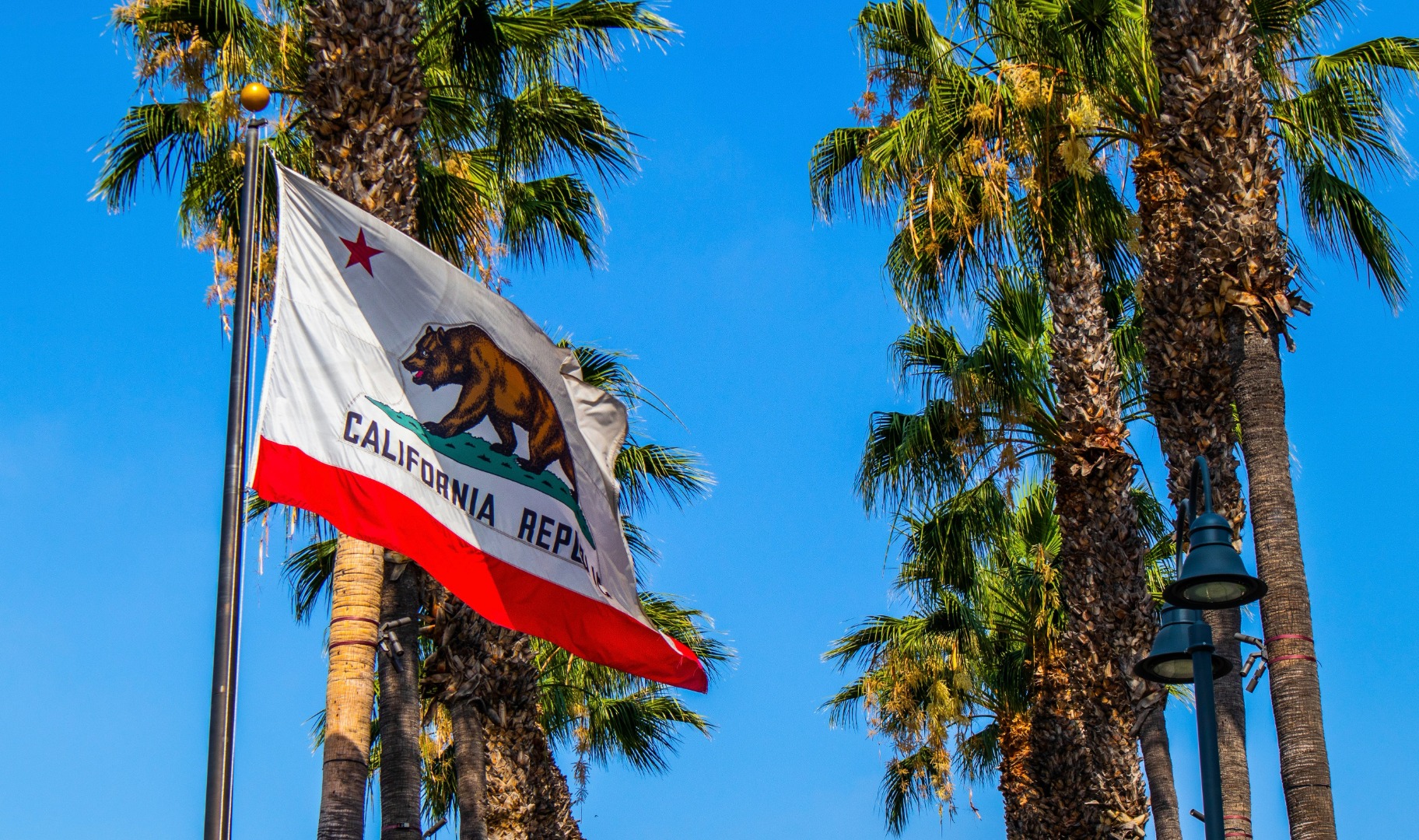
California callin’? From its incredible shorelines to its status as the innovation hub of the world, we unpack what makes the state one of the biggest legal markets.
The Golden State has long given its peers a run for their money – and for good reason. The numbers back it up as the world’s fifth largest economy, ranking among entire countries, and reaching $4.2 trillion in 2025. Indeed, the state is home to over 55 Fortune 500 companies, including Walt Disney, Netflix, LiveNation, Nvidia, and Meta Platforms, as well as an ever-growing startup ecosystem.
"What makes California unique is its resilience – the diversity of its economy means there is always sophisticated, consequential legal work to be done, regardless of the climate."
Within this booming economy, there is a diverse breadth of legal services. "What makes California unique is its resilience – the diversity of its economy means there is always sophisticated, consequential legal work to be done, regardless of the climate. That vibrancy never really goes away," Jordan Lavinsky, head of real estate and environment at Hanson Bridgett, highlights: “This is one of the most competitive legal markets in the country, and rightfully so – the work here is some of the most complex and consequential you'll find anywhere. California keeps generating demand that matches the talent, and right now, that demand is surging."
And when it comes to matters of lifestyle, “there’s something for everyone,” Jenny Swan Clearman, from Swan Legal Search, underlines: “Each region has different specialties, so depending on your interests, you can really find a place where you can thrive.”
As the largest legal services economy by headcount in the US and standing on the podium in second place for legal revenue generated after New York, California might just be the land of opportunity for West Coast attorneys. As such, we recently caught up with two West Coast-based recruiters from Swan Legal Search (SLS), president Jenny Swan Clearman, and Carla Khalife, as well as director of recruiting at California-based law firm Hanson Bridgett, Shumi Brody and litigation partner Jordan Lavinsky to showcase the Golden State.
A state’s-eye view
Before turning to California’s distinct regional hubs, it’s worth taking a step back to look at the market from a statewide perspective. The market is making a robust recovery from the post-pandemic hiring boomerang, with demand now being fueled in large part by AI-driven transactional and regulatory work. It’s also been supported by counter-cyclical practices which have kept demand steady through periods of economic uncertainty.
There are certain practices, though, which remain consistent in spite of the challenging conditions. Swan Clearman shares, “Litigation and labor & employment are always steady. Even in down-markets, demand for those practices holds.” Lavinsky adds: “California's real estate, construction, and land use market is active and growing. When broader market stability takes hold, transaction volume, financing, construction activity, and the legal work that supports it all surge together."
Real estate activity is already picking up as projects secure approval to move forward. “San Francisco has turned a corner, and AI is leading the charge. The demand to be in California's major markets is driving leasing, office and housing development in a way we haven't seen in years. The pipeline is full and the outlook is genuinely exciting,” says Lavinsky. In turn, related environmental regulatory specialists and litigators are in demand, too.
Lateral movement
As such, “It remains one of the strongest long-term lateral associate markets in the US,” Khalife confirms, adding, “There are fantastic jobs being posted every day.” Although firms are no longer hiring at the post-pandemic-frenzy rate, things have noticeably picked up after the two-year slowdown that followed. With stronger counter-cyclical practices and innovation-driven industries, "the California market has rebounded much faster than many other markets,” Khalife explains: “Firms are aggressively competing for mid-level corporate associates, and that demand shows no sign of slowing."
Delving into the specifics of what firms are looking for in a lateral candidate, Khalife explains that typically for associates, “Firms are placing far more emphasis on quality over quantity – training pedigree, the depth of your skillset, and how you've actually been utilized. A tight, well-supervised two years at a top firm is worth more than a high headcount of superficial matters."
Swan Clearman details, “Mid-level associates with minimal lateral movement are the sweet spot. They've had the foundational training, they've built real experience, and they can integrate into a new firm and contribute meaningfully from day one without requiring significant hand-holding.” In addition, “It’s in your best interest to already be barred in California, especially if you’re a litigator, and then begin your search,” Swan Clearman stresses.
“...a lot of firms want to have a presence in California.”
Looking further up the ladder, “Partner hiring hit a five-year high in 2025 with California being a top destination,” Swan Clearman notes. This adds to the bigger picture, as Swan Clearman underlines that “a lot of firms want to have a presence in California.” Firms are achieving this “strategically through team moves or mini mergers,” she explains, adding that “it gives them instant local credibility,” and allows them to build momentum. As such, competition for partners with a portable book of business remains intense.
Los Angeles: Century City and Downtown
Los Angeles is the most diversified legal market in the state. While for many it’s synonymous with the bright lights of the entertainment industry, there’s more to be found behind the curtain. “Los Angeles has quietly become one of the most sophisticated legal markets in the country – it's no longer just entertainment law. The breadth of work rivals anything you'd find in New York or DC,” Khalife highlights. Indeed, the city has produced many flagships in the legal industry, including Latham & Watkins, Gibson Dunn, Munger Tolles, Paul Hastings, and Quinn Emanuel.
The city’s depth of expertise in entertainment and sports law remains its USP, with notable actors including Greenberg Glusker, Loeb & Loeb, Manatt, Phelps & Phillips, and O'Melveny & Myers. However, nowadays, other dominant practices in the city include M&A, real estate, private equity, litigation, labor & employment, and restructuring.
“Los Angeles accounts for nearly one-third of all lawyers in California.”
Its legal market also stands out for its sheer volume of attorneys. “Los Angeles accounts for nearly one-third of all lawyers in California,” says Swan Clearman. As such, it’s a major hub for lateral placements; indeed, for SLS, “it's one of our most active markets and makes up nearly half of our placements every year,” she estimates. There’s also no shortage of choice of firms, with plenty of top 50, 100, and 200 outfits, mid-market firms, and high-end boutiques – such as litigators Hueston Hennigan, Bird Marella, Miller Barondess, and Susan Godfrey – on the scene.
Diving even deeper into the micro-view: Century City is the area’s main legal hub, though there are other sub-regions like downtown and Santa Monica with significant activity. Downtown has traditionally been a litigation stronghold due to its proximity to the courts, while Santa Monica, also known as ‘Silicon Beach’ in reference to its tech-focused scene, is home to big-tech players.
Within the area, we’re seeing firms positioning themselves where their clients, employees, and practices are focused. Cooley and Orrick, for example, have bases in Silicon Beach as well as downtown. Other large outfits, including Latham & Watkins, Morrison Foerster, and Allen Matkins, also have offices in downtown and Century City reflecting a pattern of rebalancing. Swan Clearman notes there has been a slight shift to increasing footprint westward because “firms want their offices in locations where people are motivated to come to work, and Century City offers a more walkable campus feel.”
San Francisco
Only seven miles by seven miles, San Francisco offers attorneys the “sophistication of New York, with that direct exposure to the tech economy. It's more established and structured than Silicon Valley,” Khalife headlines. With plenty of later-stage companies calling the city home, “associates can expect to work on nationally significant matters,” she adds. It’s a hotspot for tech transactions, EC/VC, and fund formation, as well as complex litigation and white-collar work.
“San Francisco gives attorneys a real range, with sophisticated full-service firms at every tier and elite litigation boutiques that compete at the national level,” Swan Clearman confirms. Major BigLaw players, including Skadden, Sullivan & Cromwell, Sidley Austin, and Kirkland & Ellis, have bases here. Mid-sized full-service firms such as Farella, Coblentz, Shartsis, and Hanson Bridgett – whose roots trace back to San Francisco – also operate in the market. On the litigation front, Quinn Emanuel and Boies Schiller maintain major offices, alongside trial boutiques such as Keker, Van Nest & Peters, as well as Lewis & Llewellyn and Conrad Metlitzky Kane, among others.
As for the environment, generally, it has “a very strong professional culture, similar to New York,” Khalife observes. Thankfully though, there are some differentiators between the two – not least the cost of living. According to Nerd Wallet’s Cost of Living Calculator, while San Francisco’s cost of living is 7% higher than Los Angeles, it’s comparably 32% lower than Manhattan. Given that associates at top shops here are also earning top of the market, there are plenty of benefits to be had. There’s also the benefit of “having the energy of a major city, but with that California outdoor lifestyle right at your doorstep,” notes Swan Clearman.
Silicon Valley
As the innovation capital of the world, Silicon Valley is the place to be for emerging growth and venture capital work. “Wilson Sonsini, Fenwick, and Gunderson were all founded in Silicon Valley, but today we see a market dominated by a mix of native and national firms,” Khalife observes. Other anchored BigLaw firms include Goodwin and Cooley.
“Silicon Valley lawyers are expected to function as true strategic business advisors – not just outside counsel."
The region is home to over 40,000 start-ups and hence offers associates a faster-paced and much more entrepreneurial environment. “Clients are often founders and rapidly scaling companies, so associates who work at those law firms will receive earlier client exposure and responsibility on that side of things,” says Khalife: “Silicon Valley lawyers are expected to function as true strategic business advisors – not just outside counsel. The expectation is that you'll be proactive about your own development and your clients' growth." Venture capital, EC/VC, tech transactions, data licensing, patent litigation and, of course, AI governance are dominant practices here.
Sacramento
Within the Central Valley, the state’s capital, Sacramento, has carved out an identity of its own: “Sacramento is a smaller market, but it has real strengths, particularly in government affairs and lobbying, healthcare, energy, public agency, eminent domain, and water rights,” Swan Clearman explains. Indeed, it’s home to the California State Legislature and the Governor making it a real government and regulatory hotspot.
“There are some powerful firms in Sacramento worth knowing, both BigLaw and smaller firms,” Khalife notes, ranging from Orrick, with strengths in public finance, and Pillsbury with strengths in energy regulatory and CPUC work, to outfits such as Manatt, Phelps & Phillips, known for its healthcare regulatory practice, and Downey Brand. “Downey Brand is a local anchor,” Khalife adds: “It’s headquartered in Sacramento and is a full-service firm, but it's well known for its water and natural resources practice, which is one of the most respected in the country.”
Healthcare is another key market pillar. Four large health systems are based here: Dignity Health, Kaiser Permanente, Sutter Health, and UC Davis Health. The state’s healthcare regulators, including the Department of Health Care Services and the Department of Managed Health Care, all operate from the state capital, making the city a national center for healthcare regulatory work.
San Diego
As a waterfront city, San Diego has long been somewhat of a lifestyle market, offering more work/life balance with a slightly more affordable cost of living. In the grand scheme of things, it’s a smaller legal market having carved out its niche for technically sophisticated practices like biotech, life sciences, intellectual property, and patents. As such, firms here “increasingly compete nationally for elite life sciences and patent talent,” Khalife notes. With a large naval base in the city, there’s also a lot of government contracts work on offer.
Mid-market firms have a strong foothold in the city. “It’s no longer a satellite-type market,” Swan Clearman makes clear: “In the past, firms have unsuccessfully tried to enter the market, but more recently, there has been a resurgence in firms including San Diego as part of their strategic growth plans.” Since 2020, more than 20 law firms have expanded or opened new hubs in the area, including Quarles & Brady’s merger with Paul Pelvin, Greenberg Traurig, Glaser Weil, Snell & Wilmer, and Hanson Bridgett. As Brody from Hanson Bridgett puts it, “It’s really important for us to have an anchor there, particularly in relation to our healthcare, real estate, construction, and appellate capabilities."
Orange County
Just south of Los Angeles sits its more relaxed neighbor, Orange County, with endless beaches and a real strength in the mid-market economy. It offers local attorneys a blend of sophisticated mid-market legal work and career stability. Well established in corporate, M&A, healthcare, employment, real estate, and litigation, OC hosts a mix of home-grown outfits and BigLaw heavyweights, from the likes of Rutan & Tucker, known for its real estate, business litigation, and employment expertise, and Yocca Carlson & Rauth, which focuses on securities and M&A, to Latham & Watkins, Sheppard Mullin, and Jones Day, among others.
"Orange County's economy is anchored by a deep base of privately held companies, family-owned businesses, real estate developers, healthcare organizations, and high-net-worth individuals."
Interestingly, “Orange County recently overtook San Francisco in total practicing attorney count, and we’re likely going to see that increase over the next few years,” Swan Clearman highlights. This is likely due to the concentration of certain businesses in the area, as Khalife explains: “Unlike Los Angeles, which is often driven by large institutional clients and headline-making transactions, Orange County's economy is anchored by a deep base of privately held companies, family-owned businesses, real estate developers, healthcare organizations, and high-net-worth individuals.” She details, “This has created a steady demand for sophisticated corporate, real estate, employment, private wealth, and litigation practices, even during periods of broader market volatility.”
“Firms here place a greater emphasis on cultural fit, retention, and lifestyle balance,” Khalife observes, which translates to a market with notably low attrition historically, pulling in associates seeking a more sustainable career trajectory without waving goodbye to BigLaw pay packets. “Orange County also remains a destination market for laterals relocating from Los Angeles. Many associates view it as a place where they can maintain sophisticated practices while benefiting from shorter commutes, strong schools, and a more family-oriented lifestyle,” Khalife explains: “As a result, firms tend to hire deliberately and place a premium on long-term fit, making the market notably relationship-driven compared to some larger legal centers."
Words of wisdom
Alongside all the geographic intel, we also made sure to note down some top tips from our recruiter interviewees.
“Definitely understand the differences between the markets; the culture and the work style can vary significantly between each one,” Khalife highlights, emphasizing, “Specialization matters tremendously – California definitely rewards industry experience much earlier than other markets.” Khalife also adds, “The compensation is genuinely exceptional, but go in with eyes open – housing costs and California's tax burden are real. Do the math before you make the move.”
"Reputation travels fast within California legal circles – faster than people expect, given the size of the market."
Community also proved to be a running theme in our conversations. Khalife explains, “In Los Angeles and Orange County, relationships are everything. Reputation travels fast within California legal circles – faster than people expect, given the size of the market. Start building your network from day one.” Brody expands, "Many of our partners and associates are actively engaged in the community, participating in panel discussions and events with organizations and law schools. These engagements are a meaningful source of our partner and associate candidates, as well as new client relationships.” Hammering home the importance of community within the local market, Brody also notes, "What’s really driven our client work and supported our partners and associates is our strong presence in the community and continued involvement."
As such, “Having a local recruiter who truly knows the California market is a genuine advantage for candidates – our job is to understand not just the job specs, but the firm cultures, the in-office expectations, what individual partners are like to work for, and even the distinct energy each office carries,” Swan Clearman emphasizes: “That granular knowledge is something candidates simply can't get from a job posting.”
